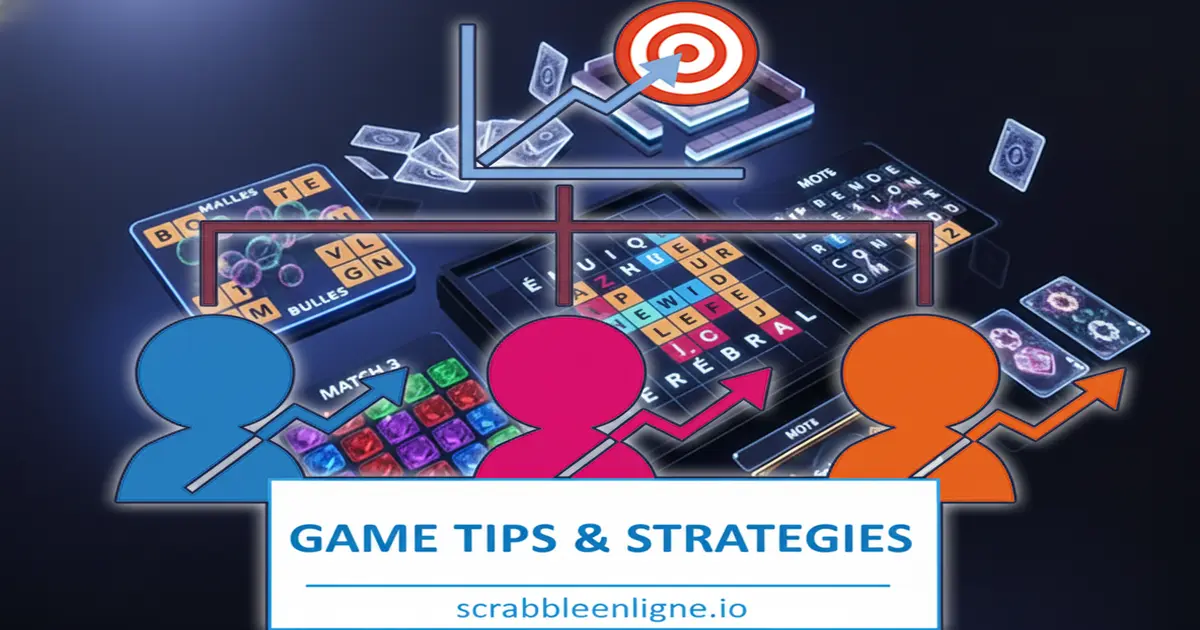
Each game category challenges different cognitive skills. Adapting your strategy according to the type of game not only helps you score higher but also allows for faster and more lasting improvement.
Word Games
Word games require excellent recognition and association skills. To improve, focus on spotting recurring patterns and anticipating possible word combinations rather than guessing randomly.
Card Games
In card games, sequential memory plays a key role. Observing which cards have already been played helps anticipate opponents’ moves and make more strategic decisions.
A useful approach is to review each game after finishing it to identify mistakes and refine your gameplay.
Solitaire Games
Solitaire requires patience and mental organization. Planning several moves ahead and avoiding impulsive decisions is crucial to prevent getting stuck.
Match-3 Games
Match-3 games rely heavily on visual perception speed. The goal is to anticipate chain reactions rather than just focusing on immediate combinations.
Training your eye to spot future opportunities greatly improves long-term performance.
Bubble Games
Bubble games require precision and foresight. Every shot should be planned carefully to prevent unnecessary accumulation of elements.
Observe angles and visualize trajectories before acting to optimize each move.
Classic Games
Classic games often rely on simple yet demanding mechanics. The key to success is consistency and mastery of the fundamental rules.
Mahjong Games
Mahjong strongly engages visual memory and observational skills. Quickly identifying available tiles helps maintain a clear view of the board.
A smart strategy is to gradually free up key areas to keep as many options open as possible.
Board Games
Online board games develop strategic thinking and adaptability. Each decision influences the course of the game.
Analyzing opponents’ play styles allows you to adjust your strategy and anticipate their actions more effectively.
Creating a Balanced Progression
Alternating between different game categories stimulates multiple cognitive skills. This variety supports overall improvement while preventing boredom.
Short but regular sessions are ideal for maintaining concentration and boosting performance over time.
Developing Focus by Game Type
Each category requires a different type of concentration. Fast-paced games like Match-3 or Bubble Games demand immediate attention and instant decision-making, while strategy games like Board Games or Solitaire require deeper, anticipatory thinking. Learning to adapt your focus improves overall performance.
A practical technique is to start each session with a few minutes of observation before making any moves. This mental preparation reduces impulsive errors and enhances decision quality.
Optimizing Your Gaming Environment
A calm and organized environment promotes better immersion. Avoid digital distractions like notifications or unnecessary open tabs. Comfortable seating and properly positioned screens also reduce eye strain.
The more stable your environment, the better your brain can focus on strategy and memory.
Building a Weekly Practice Routine
To improve consistently, plan your sessions by category. For example: Monday for word games, Wednesday for card games, and Friday for Mahjong or Solitaire. Alternating categories stimulates different cognitive skills while avoiding monotony.
Structured practice makes it easier to track improvements and maintain high motivation.
Analyzing Mistakes to Progress
After each game, take a moment to review decisions that were less effective. Was it a lack of anticipation? Poor time management? Risky strategies? This analysis strengthens strategic memory and adaptability.
Experienced players often progress faster through analysis than by simply playing more.
Maintaining Long-Term Motivation
The key to improvement is consistency. Set realistic goals and celebrate small victories. Even a slight score increase is a sign of cognitive growth.
Balancing personal challenges with relaxed gameplay helps maintain both performance and enjoyment.
Conclusion
Every game category offers unique opportunities for growth. By adapting your approach and playing thoughtfully, each session becomes a tool for personal improvement and lasting enjoyment.